
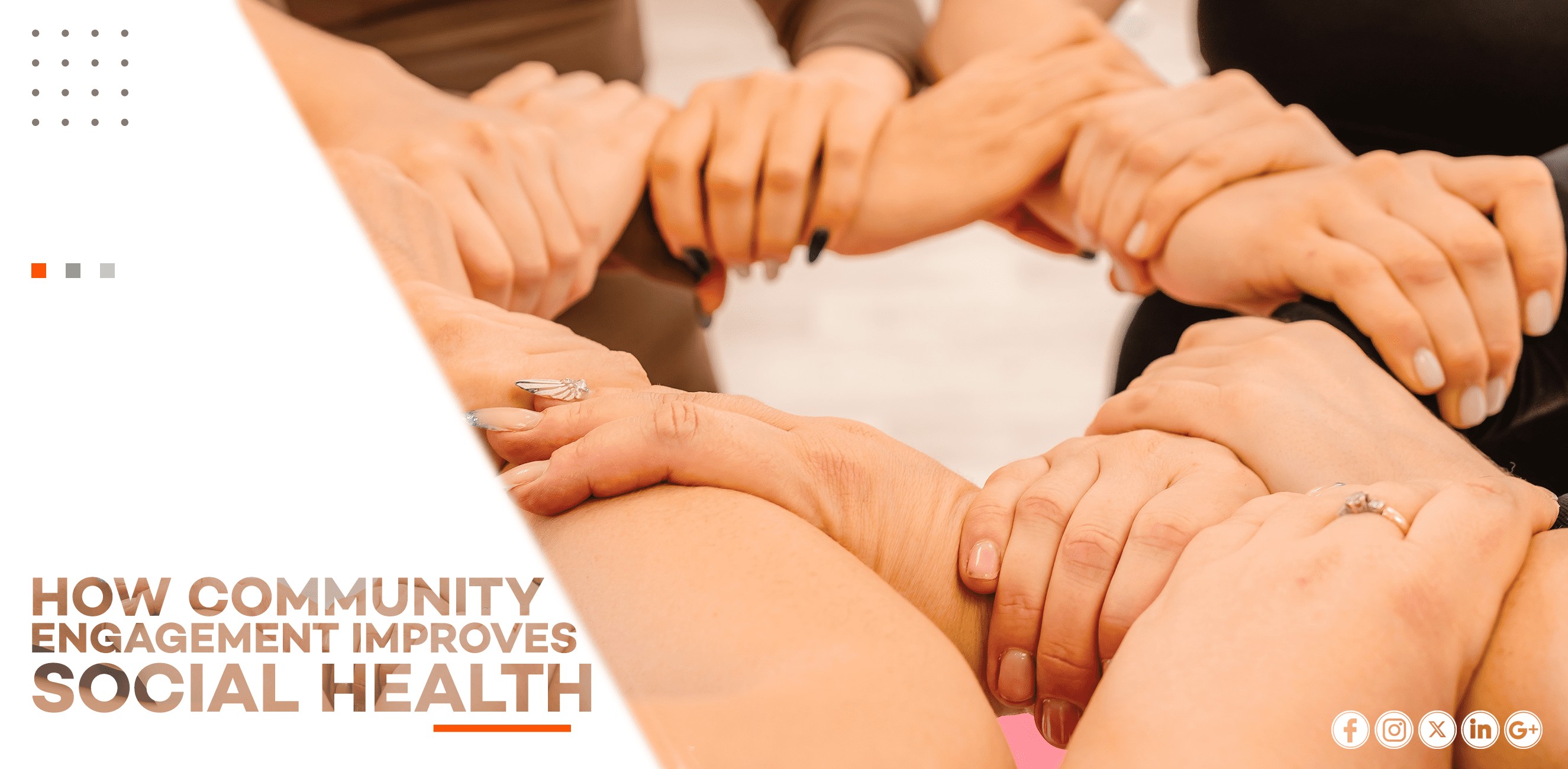
INTRODUCTION – HOW COMMUNITY ENGAGEMENT IMPROVES SOCIAL HEALTH
In the pursuit of a happier and healthier life, the role of community engagement stands out. Active participation in community activities and volunteering not only strengthens our social fabric but also deeply impacts our mental health and wellbeing. In this article, you will explore how community engagement improves social health and wellbeing. This involvement promotes a deep sense of purpose and contributes to a life. That feels more fulfilling and interconnected, enhancing our overall quality of life.
THE POWER OF COMMUNITY ENGAGEMENT FOR SOCIAL HEALTH
Community involvement offers a unique avenue to connect, cultivating a sense of belonging and shared identity. Whether through local projects, cultural events, or environmental initiatives, each form of involvement brings a sense of contribution and community spirit. Engaging with diverse groups within the community can broaden our perspectives. It allows us to appreciate the rich tapestry of experiences and backgrounds that make up our neighbourhoods.
PROMOTING A SENSE OF PURPOSE
Engaging in community service endows individuals with a meaningful sense of purpose. It transforms routine life into a series of opportunities to make a difference, no matter how small. This sense of purpose is energising, providing a clear direction and a sense of belonging to a cause greater than oneself. It also encourages continuous personal growth and self-discovery as individuals navigate various roles and responsibilities within their community undertakings.
BUILDING SOCIAL CONNECTIONS
Active participation in community events and initiatives is a cornerstone for building strong social connections. These interactions are not just about working towards a common goal but also about creating a network of support, understanding, and shared experiences. Such connections can be vital for people who feel isolated or disconnected, offering them a sense of inclusion and community membership.
ENHANCING PERSONAL GROWTH
Community engagement provides numerous opportunities for personal growth and development. It exposes individuals to new ideas, challenges, and skill sets, expanding their horizons and self-awareness. Participating in community activities can also hone leadership skills, improve communication abilities, and promote resilience as individuals learn to navigate diverse group dynamics and overcome challenges collaboratively.
THE RIPPLE EFFECT OF VOLUNTEERING
The positive impact of volunteering extends far beyond the individual, creating a ripple effect throughout the community engagement for social health and wellbeing. It contributes to the community’s social and economic health and wellbeing, enriching lives and addressing various societal needs. This collective effort improves community members’ quality of life and builds a stronger, more cohesive society.
OVERCOMING BARRIERS TO PARTICIPATION
Recognising and overcoming barriers to community engagement is vital. Time limitations, lack of information, or failure to contribute can deter potential volunteers. Addressing these barriers involves creating more accessible and flexible volunteering opportunities, providing clear information, and promoting an inclusive environment where everyone feels welcome to participate.
A MORE CONNECTED LIFE
Individuals experience a more deep connection to their surroundings through active community engagement. It’s about feeling part of a larger narrative, where personal contributions have tangible impacts. This connection transcends individual activities and creates a sustained sense of belonging and community identity, integral to personal and communal health and wellbeing.
CONCLUSION TO COMMUNITY ENGAGEMENT FOR SOCIAL HEALTH
Active participation in community activities and volunteering is more than just an act of service; it is a pathway to a richer, more connected, and fulfilling life. It nurtures our mental health and wellbeing, provides a strong sense of purpose, and deepens our social connections. In engaging with our communities, we not only enhance our own lives but also contribute significantly to collective health and wellbeing, creating a more compassionate and interconnected world.